

What is devotion?
Unlike Julian of Norwich, I have no idea what I'm doing
In the late 14th century in Norwich, England, following a profound encounter with the divine, a young woman had herself permanently sealed in a stone chamber attached to a church. She had been gravely ill, on the brink of death, when her priest — a kind of gatekeeper between laypeople and God — administered last rites, essentially releasing her from the earthly realm. It was in these moments, having been granted direct access to the empyrean, that the woman we now know as Julian of Norwich received a transmission that changed the course of her life. Miraculously, she survived, and chose to dedicate the rest of her days to understanding and sharing her experience. She became an anchoress, entombed in a chamber with windows only for exchanging chamber pots, food, and spiritual advice. In a radical act for a woman of her time, she wrote it all down — both to understand it and to preserve it. Her writings, now known as Revelations of Divine Love, are the earliest surviving English-language works by a woman that we know of, as well as the only surviving English-language works by an anchoress.
The essential takeaway of Julian’s revelation is simple, in the way the most profound things are simple, so much so that they become cliché: love is the force that underpins all existence. The answer to every question she asked was simply love. “Hold on to this and you will know and understand love more and more,” she wrote. “But you will not know or learn anything else — ever.” For what else is there to know?
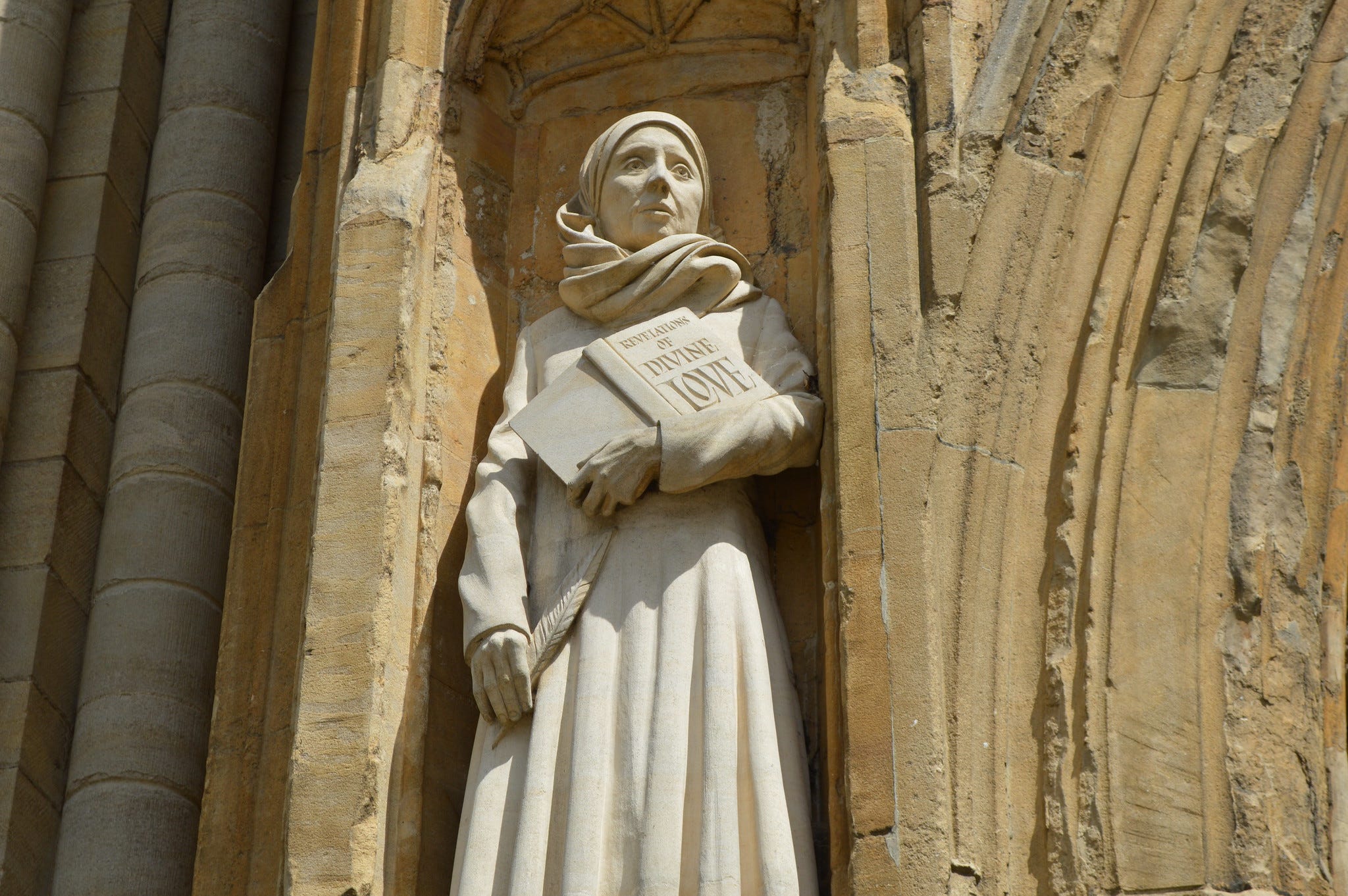
There are elements of Julian’s journey that resonate with me: her impulse toward writing, to sharing the vulnerable details of the most tender experience of her life; and the profound simplicity of her revelation, her feeling that she had, in an instant, learned everything there was to know. But I think the thing about Julian that has so captivated me is actually something that I can hardly relate to at all: her sense of certainty. She reached a spiritual crossroads, and made a remarkable choice. I imagine she must have asked herself, in the wake of her epiphany: okay…what now? And before too long, they were sealing her into a cell for decades to come.
What does it actually look like to dedicate your life to god? This question has been rattling around my head for years, ever since my first and most profound spiritual encounter. With very little inherited religious framework to work off of, I have the freedom to make up the answer for myself, but I lack the guidance that comes with being part of a longstanding tradition.
And so I struggle. I am plagued by the sense that I’m not doing enough, and what I am doing, I’m not doing right. This restless inadequacy has haunted me far longer than any spiritual yearning. The realization that I wanted to dedicate my life to god was a relief at first: finally, an answer to this rankling puzzle of purpose! But eventually it only intensified my longing and confusion. Sure, I have a new true north, something to direct my life towards. But how to direct it, exactly? I had a major breakthrough, a life-changing, clarifying, brain-blastingly profound realization — and yet I still don’t know what to actually do.
I envy Julian, surprising as that may sound. She made a decision that meant she never had to wonder whether she was living out her purpose. Her life had resolve, even if it was tedious or limiting or sometimes felt like a big sacrifice. I too want to wake up every day and trust that I am following through on my commitment — but I’m still trying to figure out what that even is, and what it means for me.
After five years of pondering this question, I’m still not sure what I’m supposed to do. I’m not going to have myself enclosed in a stone chamber, and I may never find a calling that feels as certain as Julian’s. But I’m beginning to finally grasp that spiritual commitment, for me, probably isn’t going to be about certainty in action. My inquiry of how to do this spiritual life is never going to have a satisfying answer, because it’s the wrong question.
It’s learning how to be, rather than what to do, that is becoming the real thrust of my sacred inquiry. This, of course, doesn’t land so well in our contemporary world of “getting and spending,” where what you “do” is more readily valued than who you really are. So much so that many of us have no idea who we really are, or how to be present with ourselves in a way that is tranquil, joyful, and accepting.
The social justice activist and theologian Rabbi Abraham Joshua Heschel says that “the higher goal of spiritual living is not to amass a wealth of information, but to face sacred moments” — and sacred moments happen constantly, if you’re paying attention. Sometimes I think I could spend my whole life reexamining quotidian rituals as prayerful practice: cooking dinner, going to the gym, stopping in at my local coffee shop, even getting into an argument with someone I love. But Heschel’s advice isn’t so much about identifying these moments, or even giving direction about what to do when they come up. Rather, it is about cultivating a deeper sense of presence within them, more rooted in our true natures, and more accepting of whatever we are being faced with, even if it’s challenging or uncomfortable.
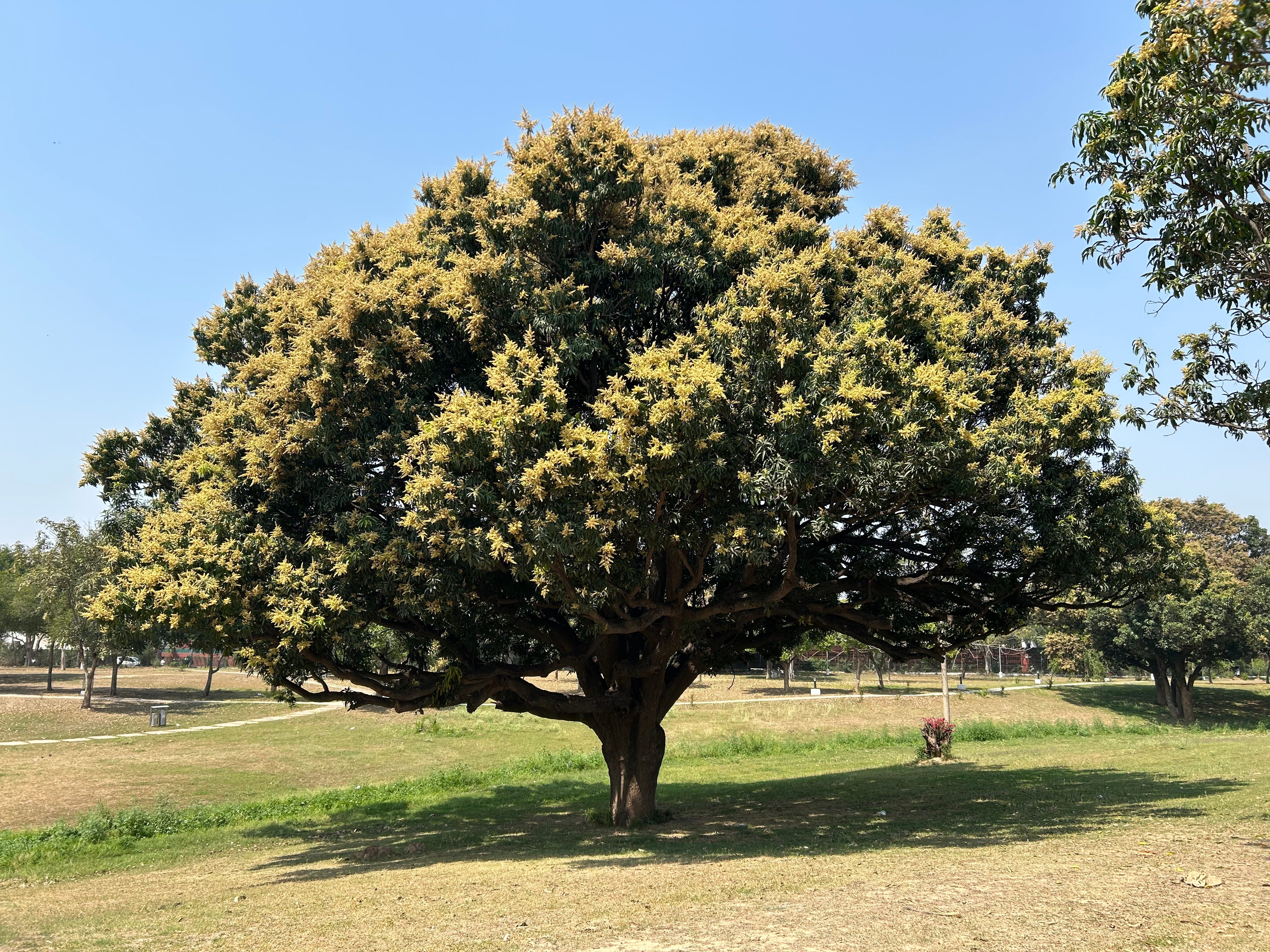
“A tree gives glory to God by being a tree,” writes the Trappist monk, mystic, and activist Thomas Merton. “This particular tree will give glory to God by spreading out its roots in the earth and raising its branches into the air and the light in a way that no other tree before or after it ever did or will do.” He believed that the process of getting to know yourself, and then simply being yourself, is the most devotional act possible. “For me to be a saint means to be myself,” he writes. “Therefore the problem of sanctity and salvation is in fact the problem of finding out who I am and of discovering my true self.” He’s not talking about taking a personality test to discover your perfect career path. He’s talking about your soul, that pure manifestation of god, unsullied by the trappings of the ego.
Merton is one of my favorite writers and thinkers about spirituality, because he is plagued by many of the same normal human doubts and questions that I am. He is not some perfect, pious monk, evangelizing from a place of absolute confidence — he’s insecure and uncertain, and he’s in constant conversation with his own unfinished-ness. He knows that, unlike the tree, which is untroubled by doubt or comparison, it’s harder for us humans. Our essence eludes us: it gets lost in the churn of life, in the comforting masks of our identities and the activities that we think define us.
Part of me yearns for the certainty of a cell, of a commitment with a path laid out before me. But so far, my turn toward god has not made my life simpler or smaller or more manageable. In fact it has done the opposite: it has blasted the doors open so wide that they have disappeared entirely. The world has gotten bigger and richer and more animated and more thrilling and more complex — not more certain or straightforward. What to do? I still have no clue. But how to be? I’m still figuring it out, but at least I’m finally asking the right question.
I feel this. If only I were more certain! I think about how Krista Tippet talks about 'living the questions'.
It’s quite moving to read someone’s thoughts that are so clear and have such deep resonance. Thank you Ellie for sharing deep and personal insights